
The House Always Wins
Diagnosing Dr. House and the Fetish of Medical Genius

I. The Cult of the Clever Doctor
There is a room in the collective unconscious where a man limps through a hallway, Vicodin in one hand, genius in the other. He doesn’t greet his colleagues. He does not smile. He mocks the dying. He saves them anyway.
We know him. We admire him. Some of us became him.
Gregory House.
To many, he is just a TV character. To us — the physician-philosophers, the exhausted interns, the weary consultants — he is an archetype. A cipher. A mirror. He is what happens when brilliance is worshipped, and compassion becomes optional. He is what happens when we believe medicine is just puzzles, and cast away all humanity.
And we let him win.
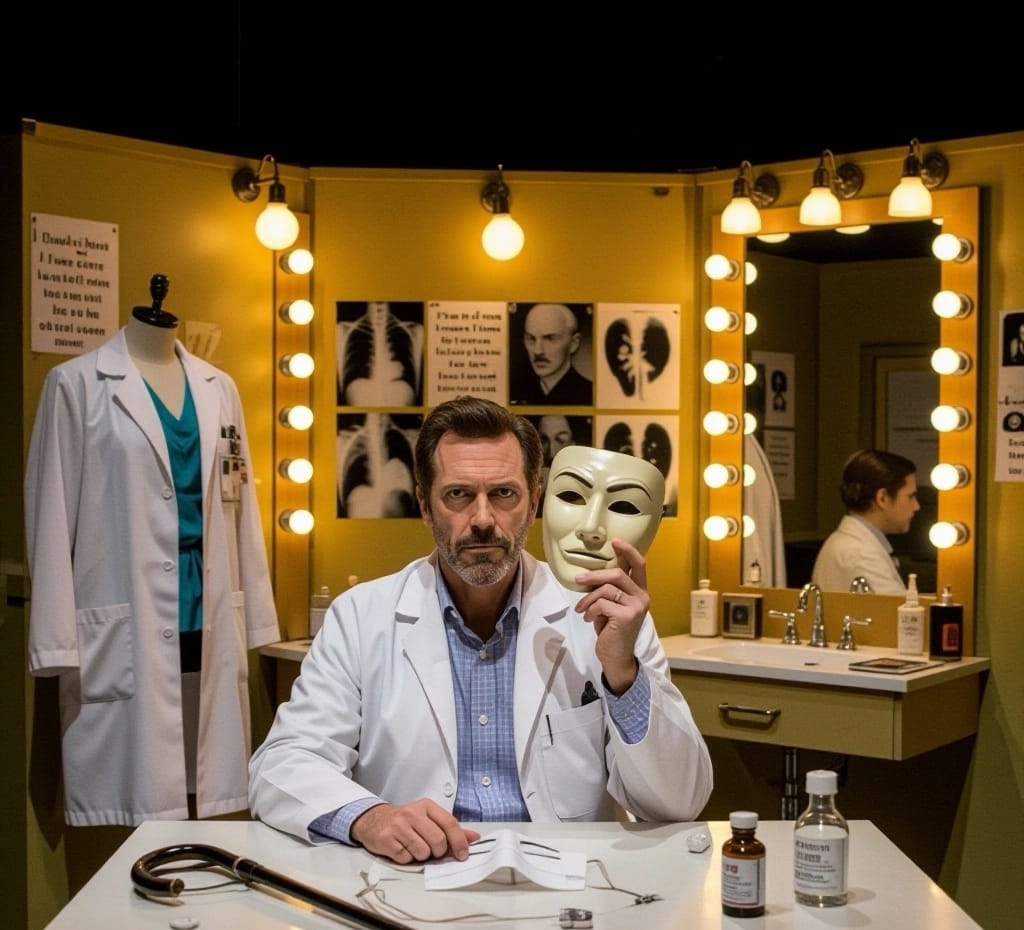
II. Addiction as Epistemology
House is not merely addicted to Vicodin. He is addicted to answers.
Pain, for him, is not something to feel, it is something to solve. The patient is not someone to hold, it is someone to decode. He seeks certainty the way the rest of us seek love; desperately, compulsively, with the full ferocity of a man who fears meaninglessness.
But here is the diagnosis; the addiction is not his alone. It belongs to medicine itself.
We are trained to privilege the diagnostic over the relational. To chase the rare cause over the mundane truth. To hunt, not to hold. Our reward system is geared toward cleverness. If you identify an obscure metabolic disorder, you are a hero. If you sit with a dying man and help him grieve, you are just... doing your job.
And so we reward the clever addict. We crown him saint of our fatigue. Because in him, we see an escape from the unbearable burden of feeling.
III. Psychopathy or Protection?
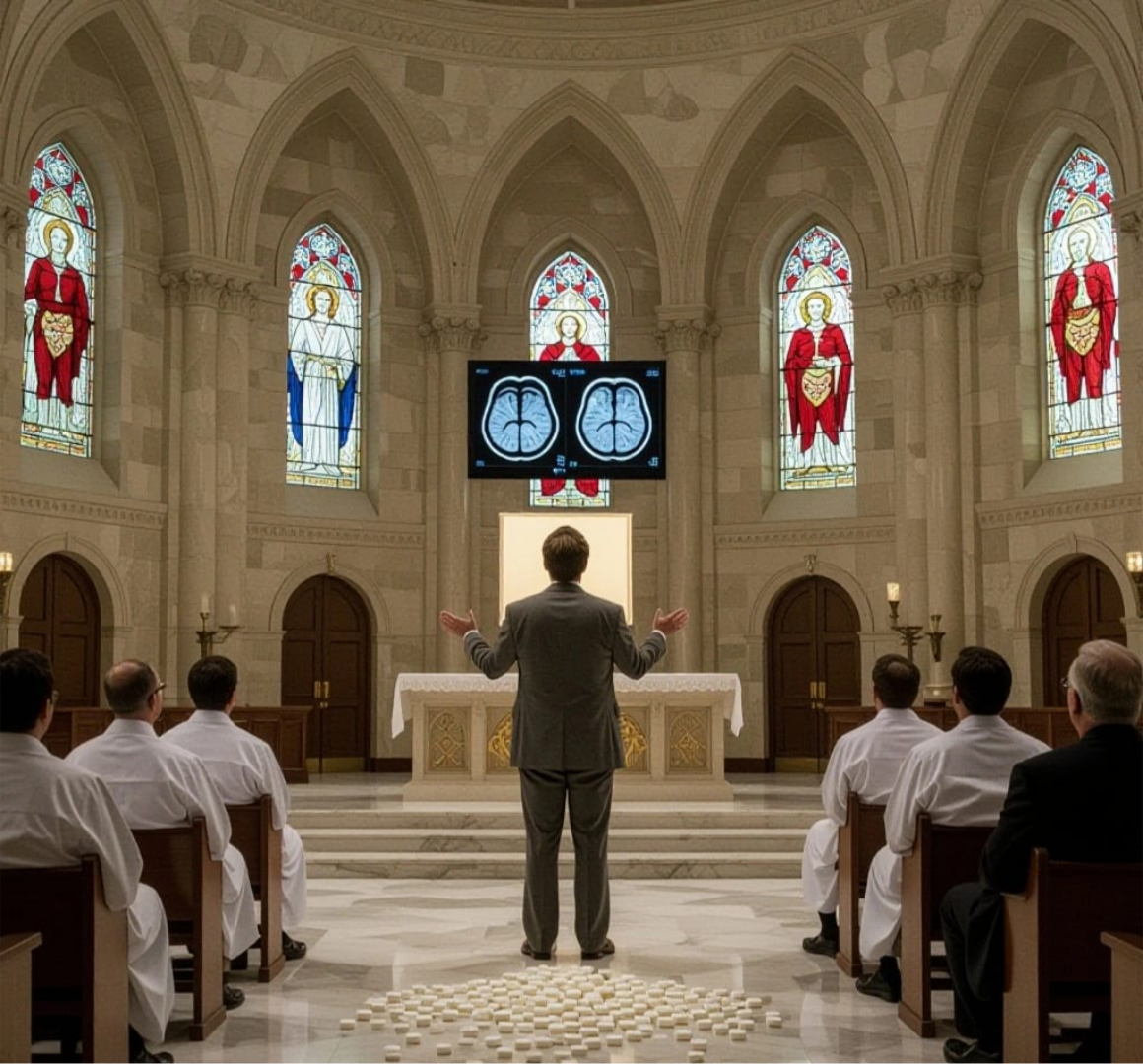
House violates boundaries. He gaslights patients. He disrespects consent. He uses people as means, not ends. This is often framed as “brilliant but difficult.” But in psychiatric terms, he exhibits traits of antisocial personality disorder, narcissism, and perhaps schizoid detachment.
And yet, there is something tragic here.
I do not believe House is cruel because he enjoys it. I believe he is cruel because he believes kindness is a lie. He has seen how sentimentality misleads. How hope clouds judgement. He has confused emotional restraint for intellectual purity.
But beneath that is trauma. A primal wound.
Freud wrote that where there is a wound, there will be a compulsion to repeat. House is wounded. Therefore, he repeats. He repeats the script of control, of detachment, of mockery. He builds a fortress of intellect so he never has to risk the intimacy of care.
How many of us have done the same?
IV. The Patient as Prop
The most troubling thing about House is not what he does. It’s what we do not see.
The patient never gets a story.
They arrive in crisis, seizure or sweat or collapse. They are mysterious. They are misdiagnosed. They are discussed. They are dissected. And then they are saved.
But we never see them live.
We do not see their families. We do not know their traumas. They exist only to reveal the doctor's brilliance. They are, in essence, narrative corpses, revived only to prove a point.
This is not fiction. This is clinic.
How often do we speak about the patient instead of to them? How often do we round without knowing the patient’s name? How often do we celebrate our own cleverness without noticing the grief in the patient's eyes?
House is not a monster. He is our mirror. A mirror polished with sarcasm, acetaminophen and hydrocodone.
V. Medicine as Game, Not Grace
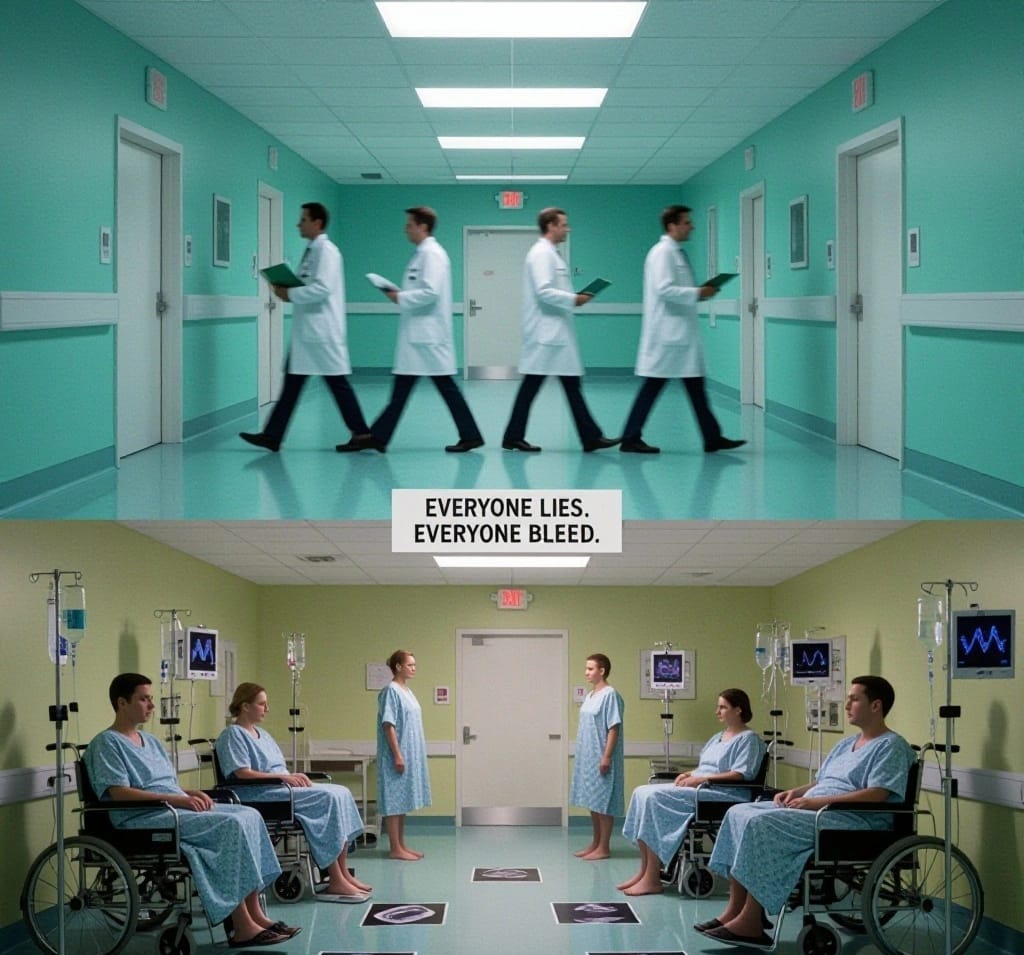
One of the show’s central conceits is that “Everybody lies.” This justifies House’s suspicion, his emotional isolation, his moral aloofness.
But perhaps the more honest maxim is this: “Everybody bleeds.”
The fetish of medical genius transforms the hospital into a casino of diagnostic games. It turns suffering into a riddle. But suffering is not a riddle. It is not meant to be solved. It is meant to be witnessed.
House never cries. He limps, he yells, he swallows pills like sacraments, but he never cries.
And because he does not cry, we do not cry either. We watch with admiration, not empathy. We clap for his intellect, but we forget the wound.
And so we become like him.
VI. The House Always Wins
What does it mean that this is the doctor we made famous?
Not the kind one. Not the tireless nurse. Not the social worker who sleeps in her car. But the cruel, brilliant, broken man who never learns how to love.
It means something is wrong in the soul of our profession.
It means we are starving for something we cannot name. We want to believe that cleverness can save us. That if we are brilliant enough, we won’t have to feel the full weight of the world’s pain. That detachment is a shield, not a wound.
But House does not win because he is right.
He wins because we made a wager. We bet that medicine was about answers. He proved us right.
But the prize is loneliness.
VII. Toward a Different Kind of Genius
I do not write this to cancel Dr. House. I write this to grieve him.
I write this for the medical students who believe they must become hard to survive. I write this for the residents who think sarcasm is strength. I write this for the consultants who mistake fearlessness for wisdom.
There is another kind of genius.
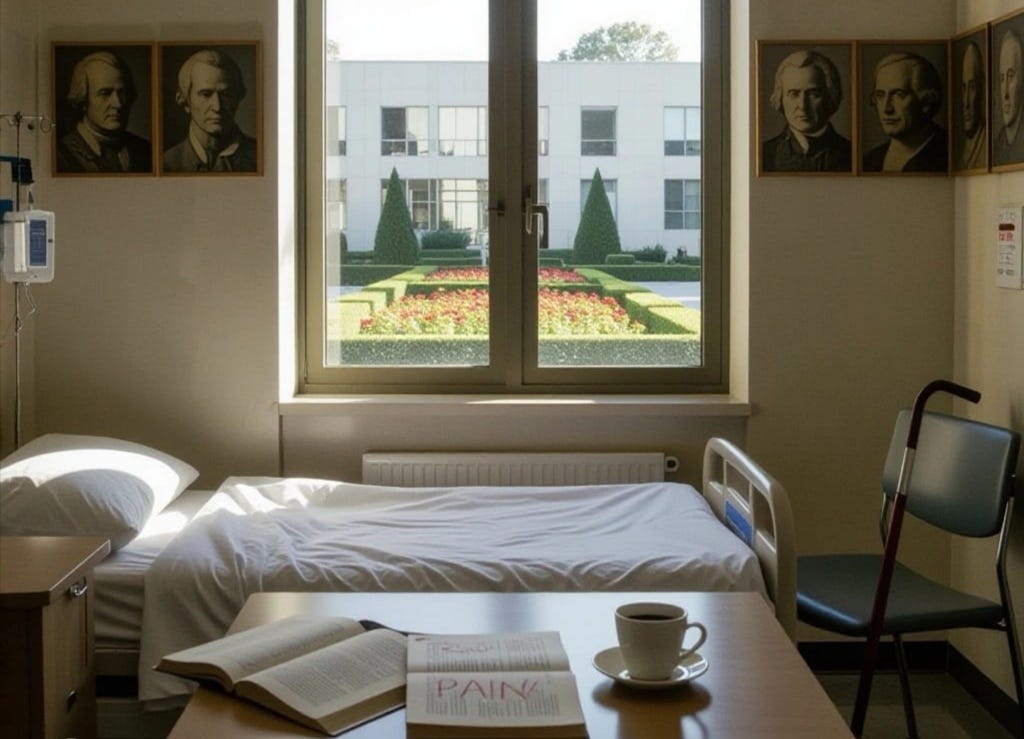
The genius of presence. The genius of gentleness. The genius of staying at the bedside of someone who will not recover, and still believing it matters.
There is genius in feeling. Genius in doubt. Genius in saying, “I don’t know, but I am here.”
House will always win on television.
But in real life?
I want the one who sits beside me when I’m afraid.
I want the one who cries when I die.
And perhaps, in some quiet, unfilmed ward, House finally puts down the Vicodin, opens the chart, and writes the only thing that ever mattered:
“Patient was in pain. I stayed.”
To heal is to understand.
You can explore my other pieces here.